This means that as banks entered the marketplace to lend cash to property owners and became the servicers of those loans, they were also able to produce new markets for securities (such as an MBS or CDO), and benefited at every step of the process by gathering fees for each deal.
By 2006, majority of the largest monetary firms in the country were included in the nonconventional MBS market. About 45 percent of the biggest firms had a large market share in three or 4 nonconventional loan market functions (coming from, underwriting, MBS issuance, and maintenance). As displayed in Figure 1, by 2007, almost all stemmed home mortgages (both traditional and subprime) were securitized.
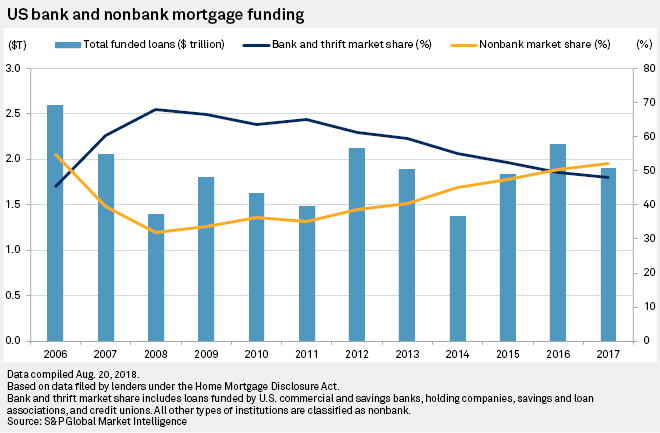
For example, by the summer of 2007, UBS kept $50 billion of high-risk MBS or CDO securities, Citigroup $43 billion, Merrill Lynch $32 billion, and Morgan Stanley $11 billion. Because these institutions were producing and buying dangerous loans, definition of timeshare they were hence very susceptible when housing prices dropped and foreclosures increased in 2007.
In a 2015 working paper, Fligstein and co-author Alexander Roehrkasse (doctoral candidate at UC Berkeley)3 take a look at the reasons for fraud in the home loan securitization market during the monetary crisis. Deceitful activity leading up to the market crash was widespread: home loan begetters typically tricked debtors about loan terms and eligibility requirements, in many cases concealing info about the loan like add-ons or balloon payments.
Banks that created mortgage-backed securities often misrepresented the quality of loans. For instance, a 2013 fit by the Justice Department and the U.S. Securities and Exchange Commission found that 40 percent of the underlying home loans stemmed and packaged into a security by Bank of America did not fulfill the bank's own underwriting standards.4 The authors look at predatory loaning in home loan originating markets and securities how much does timeshares cost fraud in the mortgage-backed security issuance and underwriting markets.
The authors show that over half of the banks analyzed were taken part in prevalent securities fraud and predatory financing: 32 of the 60 firmswhich include mortgage lenders, industrial and financial investment banks, and cost savings and loan associationshave settled 43 predatory loaning matches and 204 securities scams suits, totaling almost $80 billion in charges and reparations.
What Does Recast Mean For https://www.theedgesearch.com/2018/12/buying-commercial-real-estate-in-orange-county-california.html Mortgages for Dummies
Several companies went into the home mortgage market and increased competition, while at the very same time, the swimming pool of viable mortgagors and refinancers began to decrease quickly. To increase the swimming pool, the authors argue that big companies encouraged their pioneers to take part in predatory financing, typically discovering borrowers who would take on risky nonconventional loans with high interest rates that would benefit the banks.
This allowed monetary institutions to continue increasing revenues at a time when standard mortgages were scarce. Companies with MBS providers and underwriters were then compelled to misrepresent the quality of nonconventional mortgages, often cutting them up into various pieces or "tranches" that they could then pool into securities. Additionally, since big companies like Lehman Brothers and Bear Stearns were participated in numerous sectors of the MBS market, they had high incentives to misrepresent the quality of their home loans and securities at every point along the lending procedure, from coming from and issuing to underwriting the loan.
Collateralized debt responsibilities (CDO) multiple swimming pools of mortgage-backed securities (often low-rated by credit agencies); subject to rankings from credit ranking firms to indicate threat$110 Conventional home mortgage a kind of loan that is not part of a specific government program (FHA, VA, or USDA) however ensured by a private lender or by Fannie Mae and Freddie Mac; usually fixed in its terms and rates for 15 or 30 years; generally conform to Fannie Mae and Freddie Mac's underwriting requirements and loan limits, such as 20% down and a credit history of 660 or above11 Mortgage-backed security (MBS) a bond backed by a pool of mortgages that entitles the shareholder to part of the regular monthly payments made by the customers; might include conventional or nonconventional home mortgages; based on scores from credit rating companies to suggest threat12 Nonconventional home mortgage federal government backed loans (FHA, VA, or USDA), Alt-A home loans, subprime home mortgages, jumbo mortgages, or house equity loans; not purchased or safeguarded by Fannie Mae, Freddie Mac, or the Federal Real Estate Finance Firm13 Predatory loaning imposing unjust and violent loan terms on borrowers, frequently through aggressive sales strategies; making the most of debtors' absence of understanding of complex deals; outright deceptiveness14 Securities scams actors misrepresent or withhold information about mortgage-backed securities utilized by financiers to make decisions15 Subprime home mortgage a home loan with a B/C ranking from credit companies.
FOMC members set financial policy and have partial authority to control the U.S. banking system. Fligstein and his colleagues find that FOMC members were avoided from seeing the approaching crisis by their own presumptions about how the economy works using the structure of macroeconomics. Their analysis of meeting transcripts expose that as real estate costs were quickly increasing, FOMC members repeatedly minimized the seriousness of the housing bubble.
The authors argue that the committee relied on the structure of macroeconomics to mitigate the seriousness of the oncoming crisis, and to validate that markets were working logically (which of these statements are not true about mortgages). They note that the majority of the committee members had PhDs in Economics, and for that reason shared a set of assumptions about how the economy works and depend on typical tools to keep an eye on and regulate market anomalies.
46) - which mortgages have the hifhest right to payment'. FOMC members saw the price changes in the housing market as different from what was occurring in the monetary market, and assumed that the overall economic effect of the housing bubble would be restricted in scope, even after Lehman Brothers filed for insolvency. In truth, Fligstein and associates argue that it was FOMC members' inability to see the connection in between the house-price bubble, the subprime home mortgage market, and the financial instruments used to package home mortgages into securities that led the FOMC to downplay the severity of the oncoming crisis.
Indicators on What Beyoncé And These Billionaires Have In Common: Massive Mortgages You Should Know
This made it nearly impossible for FOMC members to prepare for how a recession in housing rates would impact the entire nationwide and worldwide economy. When the mortgage market collapsed, it stunned the U.S. and international economy. Had it not been for strong federal government intervention, U.S. workers and homeowners would have experienced even higher losses.
Banks are when again financing subprime loans, especially in vehicle loans and little business loans.6 And banks are when again bundling nonconventional loans into mortgage-backed securities.7 More just recently, President Trump rolled back much of the regulative and reporting provisions of the Dodd-Frank Wall Street Reform and Consumer Defense Act for small and medium-sized banks with less than $250 billion in properties.8 LegislatorsRepublicans and Democrats alikeargued that much of the Dodd-Frank arrangements were too constraining on smaller sized banks and were limiting financial growth.9 This new deregulatory action, combined with the rise in dangerous financing and investment practices, might develop the financial conditions all too familiar in the time period leading up to the marketplace crash.
g. include other backgrounds on the FOMC Reorganize employee settlement at banks to prevent incentivizing risky behavior, and boost guideline of brand-new financial instruments Job regulators with understanding and monitoring the competitive conditions and structural modifications in the financial marketplace, particularly under circumstances when companies might be pressed towards fraud in order to keep earnings.