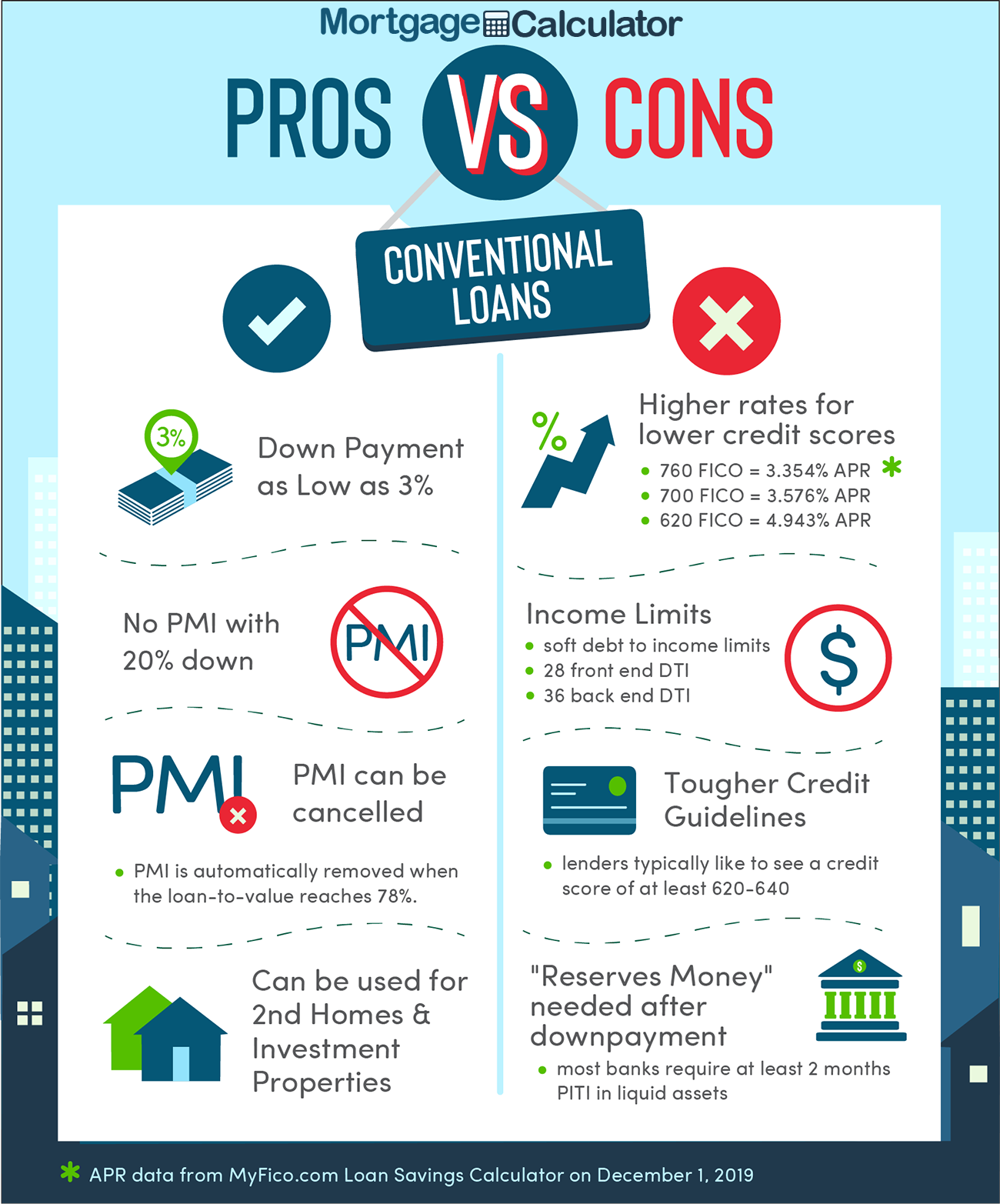
Lenders determine your debt-to-income ratio by dividing your monthly debt responsibilities by your pretax, or gross, income. Most lenders try to find a ratio of 36% or less, though there are exceptions, which we'll get into below." Debt-to-income ratio is determined by dividing your month-to-month debts by your pretax earnings." DTI sometimes leaves out monthly expenditures such as food, utilities, transport expenses and health insurance coverage, amongst others; loan providers might rule out these expenses and may authorize you to obtain more than you're comfortable paying.
You'll want the most affordable DTI possible not just to certify with the very best home mortgage lenders and buy the house you want, but also to ensure you're able to pay your financial obligations and live easily at the exact same time. Likewise known as a household ratio, front-end DTI is the dollar quantity of your home-related expenses your future regular monthly home mortgage payment, home taxes, insurance coverage and property owners association fees divided by your monthly gross earnings.
Back-end ratios tend to be slightly greater, given that they take into consideration all of your month-to-month financial obligation obligations. Which DTI ratio matters more?While home mortgage lending institutions normally look at both types of DTI, the back-end ratio frequently holds more sway due to the fact that it considers your entire debt load. Lenders tend to concentrate on the back-end ratio for standard mortgages loans that are offered by banks or online mortgage lenders rather than through government-backed programs.
If your back-end DTI is below 36%, that's even much better. When you're requesting government-backed mortgages, like an FHA loan, lending institutions will take a look at both ratios and may consider DTIs that are higher than those required for a standard mortgage: up to 50% for the back-end ratio. Preferably, however, you'll wish to keep your DTIs as low as possible, despite lending institutions' limitations.
Although DTIs are essential when getting a home mortgage, they're not enough when it pertains to assisting you find out what you can afford, states Individual retirement account Rheingold, executive director of the National Association of Customer Advocates." You can have these general guidelines around debt-to-income ratio," he says, "however the larger concern is, will you, as soon as you have that mortgage payment, have enough cash to make ends meet?" Considering that DTIs do not take into account expenses such as food, health insurance coverage, utilities, gas and home entertainment, you'll desire to budget plan beyond what your DTI labels as "budget friendly" for you.

This is especially essential because DTIs count your income prior to taxes, not what you in fact take home each month. The greater your DTI, the more likely you are to have problem with receiving a home mortgage and making your month-to-month home loan payments. There are a number of ways to reduce your debt-to-income ratio: Don't make any huge purchases on credit prior to you buy a house.
While a pay raise at work is another method to lower your DTI, it might not be possible to get one quickly. That's why it's much better to avoid taking on more debt and deal with trimming the financial obligation you have. Most of the times, loan providers will not consist of installment financial obligations like car or student loan payments as part of your DTI if you have simply a few months left to pay them off.
Getting My How Is The Compounding Period On Most Mortgages Calculated To Work
He http://lanekbcn918.trexgame.net/who-issues-ptd-s-and-ptf-s-mortgages-things-to-know-before-you-buy suggests getting your financial resources in order so that you present yourself as somebody with excellent credit and not a great deal of financial obligation. Before you sit down with a lender, using a home mortgage calculator is timeshare review one method to find out an affordable home loan payment for you. The lower your debt-to-income ratio, the more secure you are to lenders and the better your financial resources will be.
The household-owned worth of the US housing market is at an all-time high of $26. 12 trillionsignificantly greater than the pre-crisis peak of $22. 68 trillion in 2006. Housing equity and non-HELOC (house equity credit line) home loan financial obligation outstanding are also at historic highs. At the exact same time, the share of property owners with a home mortgage, at 62.
Why has this happened? What happens next? And what does it all imply? That $26. 12 trillion in total real estate worth is made up of two aspects: $10. 36 trillion in exceptional mortgage debt (including house equity credit lines) and $15. 76 trillion in home equity (the distinction between household-owned property and home mortgage financial obligation).
3 percent in 2009 to 39 - how is mortgages priority determined by recording. 6 percent in the very first quarter of 2019. On the other hand, real estate equity as a share of aggregate house worths has actually grown from 36. 7 percent to 60. 4 percent over this very same duration. What discusses the lower mortgage financial obligation relative to realty values? Initially, home equity lines of credit are less widespread than in years past.
Although the outstanding quantity of mortgages excluding home equity lines of credit exceeded its pre-recession peak in the 2nd quarter of 2019, relative to house worths, it sat at approximately 35. 4 percent in the very first quarter of 2019, well listed below its 2009 high of an estimated 54. 7 percent.
The share of property owners with a mortgage decreased progressively between 2008 and 2017, from 68. 4 to 62. 9 percentthe least expensive level because at least 2005. On the other hand, the share of owner-occupied homes without any mortgage has actually climbed up to 37. 1 percent over the very same nine-year period. Why this happened: The moving structure of owner-occupied families with and without a home mortgage owes to numerous factors, including the surge in all-cash sales in the years right away following the economic crisis, families' focus on financial obligation decrease, and mortgage credit conditions that stay tight.
Older homes are a lot more most likely than younger households to have settled their home mortgage. Though the share of elderly individuals with a home loan has increased slowly over time (figure 2), to 38 percent in 2017 for those ages 65 and older, this share is well below 80 percent for those ages 35 to 54.
Getting The How Much Are The Mortgages Of The Sister.wives To Work
Whether the share of owner-occupied families with a home mortgage continues to reduce will depend upon the interplay in between the list below elements: the speed at which young, novice homebuyers purchase houses (which depends upon the other products in this list) real estate affordability credit schedule the strength of the economy consisting of the task market To a lesser extent, it will likewise depend upon the number of elderly families have a home loan.
If new and more youthful buyers increasingly utilize cash instead of home loans to purchase their houses, competitors amongst loan providers will increase, which, in turn, may assist relieve the restrictive credit requirements in place today - percentage of applicants who are denied mortgages by income level and race. Nevertheless, the possible relief from still-tight credit standards may have a little effect on homeownership given the restricted supply of stock for sale in much of country.
By significantly paying off their mortgages and transforming their entire home worth into equity, existing house owners produce a cushion for emergencies and Go to the website retirement. However, the development in the share of homeowners ages 65 and older with a home loan bears seeing as it might represent an emerging risk to the mortgage market.
Low home loan rates have assisted push U.S. home mortgage debt to the greatest level ever. In the 2nd quarter of 2019, Americans' mortgage balances totaled $9. 4 trillion, $162 billion more than the previous quarter, according to data released Tuesday by the Federal Reserve Bank of New York. This went beyond the previous peak of $9.